Wednesday, April 28, 2010

Monday, April 26, 2010
Chinese Festivals - Laba Festival

The last lunar month is called the month of "La" in Chinese and "Ba" means eight. Therefore, Laba Festival (La Ba Jie - 腊八节) falls on the 8th day of the 12th lunar month in Chinese calendar. It used to be a religious holiday from Buddhism, but becomes popular now among the general publics in China.
Legend goes that Sakyamuni (565 B. C.- 486 B. C. ), the founder of Buddhism, becomes Buddha on the 8th of the 12th lunar month. It is said on that day he, for searching ways of people's life, traveled thousands of miles across mountains and rivers but fell down because of hunger and thirst. A girl came to save him with a bowl of milky porridge. Sakyamuni sat in deep thought under a bodhi tree, and became Buddha. Therefore, monks in temples on that day would make "porridge for Buddha", a porridge with fragrant rice and other food grains to cherish the memory for him. The porridge is made with five food ingredients as walnut, pine nut, milky grass, persimmon and chestnut. The custom of having the specially made porridge soon became a popular culture among Chinese people and they give the porridge a name as the

festival: "Laba Congee" or "Laba Porridge".
Today the porridge is cooked in various ways. In Southern China, people put lotus seed, lotus root, etc. in the porridge; in Northwestern China, people put mutton in and, in some area, people cook noodles with bittern juice from eight vegetables called "Laba Noodle". In Beijing district, people cook the porridge and have it frozen and eat it day by day. Today in many temples, porridge is offered free for people. Whether it is noodles or porridge they cook, it is the wish of the people for health and a better life in the coming year. The congee is of course extremely healthy and delicious itself. Laba porridge is not only easy to prepare,

but also a nutritious winter food because it contains amino acids, protein, vitamins and other nutrition people need. Cooked nuts and dried fruit are good for soothing nerves, nourishing one's heart and vitality, and strengthening the spleen. Perhaps that is why it is also called babao (Eight Treasure) porridge.
by jason(qingzhao guo)
reference:http://www.simple-chinese.com/chinese-culture/chinese-festivals-laba-festival.html
Tuesday, April 20, 2010
The Moon Festival
The Chinese Moon Festival is on the 15th of the 8th lunar month. It's also known as the Mid-autumn Festival. Chinese culture is deeply imbedded in traditional festivals. Just like Christmas and Thanksgiving in the West, the Moon Festival is one of the most important traditional events for the Chinese.
The Moon Festival is full of legendary stories. Legend says that Chang Er flew to the moon, where she has lived ever since. You might see her dancing on the moon during the Moon Festival. The Moon Festival is also an occasion for family reunions. When the full moon rises, families get together to watch the full moon, eat moon cakes, and sing moon poems. With the full moon, the legend, the family and the poems, you can't help thinking that this is really a perfect world. That is why the Chinese are so fond of the Moon Festival.
The Moon Festival is also a romantic one. A perfect night for the festival is if it is a quiet night without a silk of cloud and with a little mild breeze from the sea. Lovers spend such a romatic night together tasting the delicious moon cake with some wine while watching the full moon. Even for a couple who can't be together, they can still enjoy the night by watching the moon at the same time so it seems that they are together at that hour. A great number of poetry has been devoted to this romantic festival. Hope the Moon Festival will bring you happiness.
The moon cake is the food for the Moon Festival. The Chinese eat the moon cake at night with the full moon in the sky. Here are a few pictures of the typical moon cake.

The picture on the moon cake box.
 The moon cakes in the box.
 One of the moon cakes in the box.
Sunday, April 18, 2010
Winter Solstice Festival

As early as 2,500 years ago, about the Spring and Autumn Period (770-476 BC), China had determined the point of Winter Solstice by observing movements of the sun with a sundial. It is the earliest of the 24 seasonal division points. The time will be each December 21 or 22 according to the Gregorian calendar.
The Northern hemisphere on this day experiences the shortest daytime and longest nighttime. After the Winter Solstice, days will become longer and longer. As ancient Chinese thought, the yang, or muscular, positive things will become stronger and stronger after this day, so it should be celebrated.

The Winter Solstice became a festival during the Han Dynasty (206 BC-220 AD) and thrived in the Tang and Song dynasties (618-1279). The Han people regarded Winter Solstice as a "Winter Festival", so officials would organize celebrating activities. On this day, both officials and common people would have a rest. The army was stationed in, frontier fortresses closed and business and traveling stopped. Relatives and friends presented to each other delicious food. In the Tang and Song dynasties, the Winter Solstice was a day to offer scarifies to Heaven and ancestors. Emperors would go to suburbs to worship the Heaven; while common people offered sacrifices to their deceased parents or other relatives. The Qing Dynasty (1644-1911) even had the record that "Winter Solstice is as formal as the Spring Festival," showing the great importance attached to this day.
In some parts of Northern China, people eat dumpling soup on this day; while residents of some other places eat dumplings, saying doing so will keep them from

frost in the upcoming winter. But in parts of South China, the whole family will get together to have a meal made of red-bean and glutinous rice to drive away ghosts and other evil things. In other places, people also eat tangyuan, a kind of stuffed small dumpling ball made of glutinous rice flour. The Winter Solstice rice dumplings could be used as sacrifices to ancestors, or gifts for friends and relatives. The Taiwan people even keep the custom of offering nine-layer cakes to their ancestors. They make cakes in the shape of chicken, duck, tortoise, pig, cow or sheep with glutinous rice flour and steam them on different layers of a pot. These animals all signify auspiciousness in Chinese tradition. People of the same surname or family clan gather at their ancestral temples to worship their ancestors in age order. After the sacrificial ceremony, there is always a grand banquet.
by jason(guo)
reference:http://www.china.org.cn/english/features/Festivals/78308.htm
Tuesday, April 13, 2010
Double Ninth Festival
The 9th day of the 9th lunar month is the traditional Chongyang Festival, or Double Ninth Festival. It usually falls in October in the Gregorian calendar. In an ancient and mysterious book Yi Jing, or The Book of Changes, number "6" was thought to be of Yin character, meaning feminine or negative, while number "9" was thought to be Yang, meaning masculine or positive. So the number nine in both month and day create the Double Ninth Festival, or Chongyang Festival. Chong in Chinese means "double." Also, as double ninth was pronounced the same as the word to signify "forever", both are "Jiu Jiu," the Chinese ancestors considered it an auspicious day worth celebration. That's why ancient Chinese began to celebrate this festival long time ago.
The custom of ascending a height to avoid epidemics was passed down from long time ago. Therefore, the Double Ninth Festival is also called "Height Ascending Festival". The height people will reach is usually a mountain or a tower. Ancient literary figures have left many poems depicting the activity. Even today, people still swarm to famous or little known mountains on this day.

On this day, people will eat Double Ninth Gao (or Cake). In Chinese, gao (cake) has the same pronunciation with gao (height). People do so just to hope progress in everything they are engaged in. There is no fixed ways for the Double Ninth Cake, but super cakes will have as many as nine layers, looking like a tower.
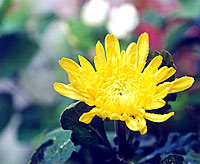
The Double Ninth Festival is also a time when chrysanthemum blooms. China boasts diversified species of chrysanthemum and people have loved them since ancient times. So enjoying the flourishing chrysanthemum also becomes a key activity on this festival. Also, people will drink chrysanthemum wine. Women used to stick such a flower into their hair or hang its branches on windows or doors to avoid evilness.
In 1989, the Chinese government decided the Double Ninth Festival as Seniors' Day. Since then, all government units, organizations and streets communities will organize an autumn trip each year for those who have retired from their posts. At the waterside or on the mountains, the seniors will find themselves merged into nature. Younger generations will bring elder ones to suburban areas or send gifts to them on this day.
by JASON GUO
references:http://www.china.org.cn/english/features/Festivals/78310.htm
Saturday, April 10, 2010
Hungry Ghost Festival

The 14th and 15th of the seventh lunar month
Much like Western culture's Halloween, some Eastern cultures celebrate a Fall festival where they believe the gates of hell are thrown open, releasing hungry ghosts to wander the earth in search of food and taking revenge upon those who wronged them in life. This month-long festival is known as the Hungry Ghost Festival and takes place during the 7th lunar month.
Unlike other celebrations of the dead in Eastern cultures that seek to honor dead ancestors, the Hungry Ghost Festival seeks to pacify the hungry ghosts, the ghosts of strangers and the un-cared-for dead. These are the ghosts of those who died by their own hands, by accidents, by drowning or hanging who have been denied entry into heaven. Angry because they are forced to dwell in hell without food or comfort, when released, they search for souls to take their place in misery.
To Taoists(道教徒) and Buddhists(佛教徒), these evil spirits are not to be taken lightly. They are most active at night and can take many forms including: snakes, moths(蛾), birds, foxes, wolves, and tigers. They can even appear as beautiful men or women to seduce the living. When they possess an individual by entering the body they cause illness and mental disorders.
Throughout this month, to keep the angry spirits amused, people stage street operas and other forms of public entertainment. In the past, people did not view the street operas as they were performed only for ghosts. Other rituals(典礼,仪式)are performed to help souls enter into heaven. Taoists do their best to avoid late nights away from these amusements and rituals to steer clear of the evil spirits. To appease these wandering spirits, Buddhists and Taoists burn bundles of joss sticks, paper hell money, food, and other offerings by the roadside. Communities along rivers or near the sea float lanterns in the shape of the lotus or carved from fruit or gourds in the water to guide them away from their homes. They follow the lanterns from the river bank or sea shore till they can no longer be seen. This is done to redeem the soul of those who died by drowning.
The most important days of this month are the 14th and 15th, the days of the great feasts. On the 14th, a great feast would be held to honor family ancestors. Prayers and offerings would be made at family altars. On the following night, the 15th, they would feast for the hungry ghosts. Held outside under the full moon, these feasts feed the evil spirits so that they will leave the living alone and bribe(贿赂) the ancestors for luck with money and the harvest.

Edit by Shel Liang
Thursday, April 8, 2010
Chinese New Year
Chinese calendar has been in continuous use for centuries. It predates the International Calendar (based on the Gregorian Calendar) in use at the present, which goes back only some 430 years. Basically, a calendar is a system we use to measures the passage of time, from short durations of minutes and hours, to intervals of time measured in days, months, years and centuries. These are fundamentally based on the astronomical observations of the movement of the Sun, Moon and stars. Days are measured by the duration of time of one self rotation of the earth. Months are measured by the duration of time of rotation of the moon around the earth. Years are measured by the duration of time it takes for the earth to rotate around the Sun.
Chinese New Year Days:
- 2005 Feb 9
- 2006 Jan 29
- 2007 Feb 18
- 2008 Feb 7
- 2009 Jan 26
- 2010 Feb 14
- 2011 Feb 3
- 2012 Jan 23
What is the Chinese New Year's Day in Year 2010?
February 14, 2010 is the first day of the Chinese new year - Year of the Tiger..
There are three ways to name a Chinese year:
By an animal (like a mscot). 2008 is known as the Year of the Rat.2009 is the Year of the Ox.2010 is the Year of the TigerThere are 12 animal names; so by this system, year names are repeated every 12 years. More. By its Formal Name (Stem-Branch). 2010 is the year of Geng Yin . 2009 is the Year of Ji Chou. In the 'Stem-Branch' system, the years are counted in 60-year Cycles, so that the Name of the Year is repeated every 60 years.2010 is the11-th year in the current 60-year Cycle.2009 is the 10-th year in the current 60-year Cycle. A "Cycle" is analogous to a "century" in the International Calendar system which is 100 years long. 2010 is Year 4707 in the Chinese Caledar.2009 is Year 4706 in the Chinese Calendar.
What's special about the Chinese New Year in 2006?
It was a Leap Year! Unlike the western calendar, where one extra day is added in February, one whole leap month is added in a Chinese Leap Year. Just think. If you get paid by the month, instead of working an extra day for nothing, you would get an extra month's pay !!! This time around, the Leap Month comes after the regular 7-th Month. The "Leap Second Month" begins on August 24,2006. Read more about this here And here.
When was the Chinese New Year's Day in Year 2003?
February 1, 2003. It was the first day in the Year of the Ram (sheep, goat).This is Year 4700 by Chinese calendar. When was the Chinese New Year's Day in Year 2002? February 12, 2002. It was the first day in the Year of the Horse.It is Year 4699 by Chinese calendar. For those interested in astrology, it is the year of the Black Horse.
When was the Chinese New Year's Day in Year 2001?
January 24, 2001. This was the first day in the Year of the Snake.This is Year 4698.
[Some says this is Year 4638, which is also plausible. Others claim this year to be either 4699 or 4399, which are almost certainly wrong.] What's special about the Chinese New Year in 2001?
It was a Leap Year! Unlike the western calendar, where one extra day is added in February, one whole leap month is added in a Chinese Leap Year. Just think. If you get paid by the month, instead of working an extra day for nothing, you would get an extra month's pay !!!
This time around, the Leap Month comes after the regular 4-th Month. The "Leap 4-th Month" begins on May 23, 2001. More about this...
12 Animals
Each year is also designated by one of the 12 Animals For instance, 2005 is Year of Rooster; 2006 is Year of Dog; and 2007 is the Year of Pig. 2008 is the Year of the Rat
This system is extremely practical. A child does not have to learn a new answer to the question, "How old are you?" in each new year. Old people often lose track of their age, because they are rarely asked about their present age. Every one just have to remember that he or she was born in the "Year of the Dog" or whatever.
Since 2008 is the Year of the Rat, any one who was born in the Year of the Rat is either 1 or 13, 25, 37, 49, 61, 73, 85 or 97 years old. When 2009 comes, the person is still born in the Year of the Rat. but he/she is 2,14, 26, 38, 50, 62, 74, 86 or 98 yeas old.Thus, instead of asking the question "How old are you?", ask the person "In which (animal) year were you born?" More about this.
New Year's decoration at the front of the house
 Colorful calligraphy called 'chun lian' (Spring couplet) are as popular as those for Halloween or Christmas.
What's this logo at top right corner of this web page?
The Chinese word for "Spring." The Chinese calls the New Year's Celebration the "Spring Festival." This particular calligraphy is a reproduction of the work by one of master calligrapher Zhao Mengfu (1254-1322) who wrote it more than 600 years ago. More on calligraphy
Are there Chinese Graphics analogous to Christmas cards?
There are colorful posters!
What is the Chinese word for 'luck'?
Posters with the word 'luck' is often seen around the New Year's. Make one yourself. Solar/Lunar calendar
For monthly calendar of 2010 and 2009(designed by Mr. Meng Zhuo of CWR Univ.)
2009 Jan Feb Mar Apr May Jun Jul Aug Sep Oct Nov Dec 2010 Jan Feb Mar Apr May Jun Jul Aug Sep Oct Nov Dec
Posters with the word 'luck' is often seen around the New Year's. Make one yourself. Solar/Lunar calendar
For monthly calendar of 2010 and 2009(designed by Mr. Meng Zhuo of CWR Univ.)
2009 Jan Feb Mar Apr May Jun Jul Aug Sep Oct Nov Dec 2010 Jan Feb Mar Apr May Jun Jul Aug Sep Oct Nov Dec
What is the story about the animal of the year?
In Chinese calendar, one of the scheme for counting years is a 12-year cycle. One counts from Year 1,2,3,... up to 12. Then starts over from Year 1. (In modern mathematics, this is modulo 12.) Instead of inventing 12 special symbols for this purpose, 12 animals are used to represent these 12 years. Rabbit (hare), for example, is the 4-th year of the cycle.
In Chinese calendar, one of the scheme for counting years is a 12-year cycle. One counts from Year 1,2,3,... up to 12. Then starts over from Year 1. (In modern mathematics, this is modulo 12.) Instead of inventing 12 special symbols for this purpose, 12 animals are used to represent these 12 years. Rabbit (hare), for example, is the 4-th year of the cycle.
Chinese dragons

For more about Chinese dragons, go to the Dragon page
Fireworks & skywriting
For a bit of fun, look at this. [Chinese BIG5] [Chinese GB] [English]
How is Chinese New Year's Day determined?
In one sentence, the Chinese New Year is the second New Moon after the winter solstice.
It is based strictly on astronomical observations, and has nothing to do with the Pope, emperors, animals or myths. Due to its scientific and mathematical nature, we can easily and precisely calculate backward or forward for thousands of years.
One explanation by Rudy Chiang
Allen Tsai's site has more details: about Year 2010 and
Chinese Zodiac Chinese Zodiac
Related Websites
The Japanese word for "New Year's Greetings" is Kinga Shinnen.
2010 is the Year Heisei 22 in Japan. Heisei is the current emperor. Japan is the only country in the world which still number the calender years starting from the ascession of its emperors.
Other Links
Some of these sites may be worth a visit. More facts than you ever want or need. But interesting!
Reference: http://www.chinapage.com/newyear.html
Subscribe to:
Posts (Atom)

